
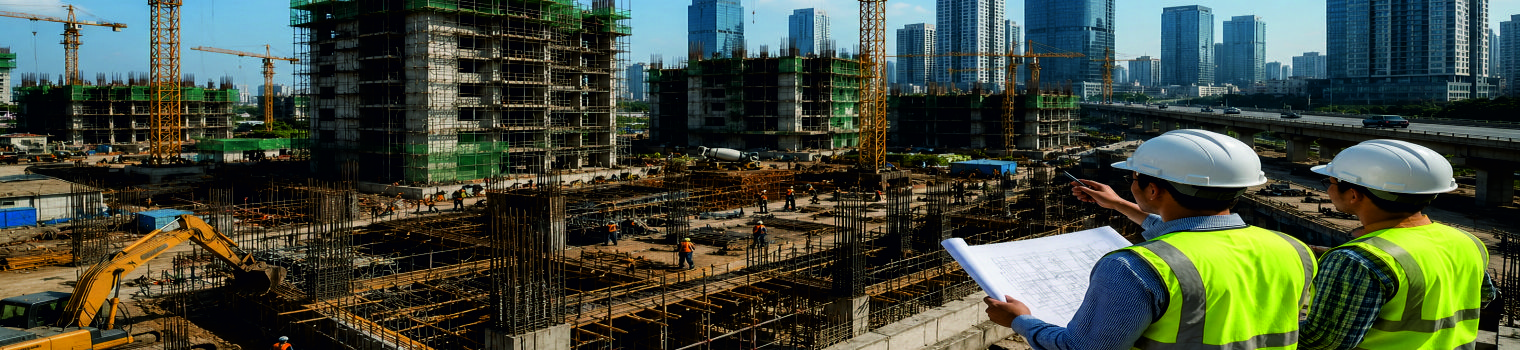
Building Sustainable Cities for the Future
Civil engineering has traditionally been the cornerstone of human progress. From ancient aqueducts to modern skyscrapers, civil engineers have shaped contemporary civilization. However, in 2026, the profession is undergoing a radical digital and ecological transformation. Driven by rapid urbanization and climate change, modern civil engineering is no longer just about “building”—it is about designing intelligent, resilient, and eco-friendly urban ecosystems.
The Evolution: From Foundations to Future-Tech
While the principles of structural integrity date back to the Pyramids, the modern specialized fields now incorporate digital technologies at every level:
- Structural & Geotechnical Engineering: Focused on high-rise stability and soil mechanics.
- Environmental & Water Resource Engineering: Vital for sustainable urban development.
- Smart Infrastructure Building: The newest frontier, integrating automation into the physical world.
Smart Infrastructure: The Pulse of the Modern City
Smart infrastructure refers to the integration of Artificial Intelligence (AI), the Internet of Things (IoT), and real-time data analysis into the very fabric of our cities.
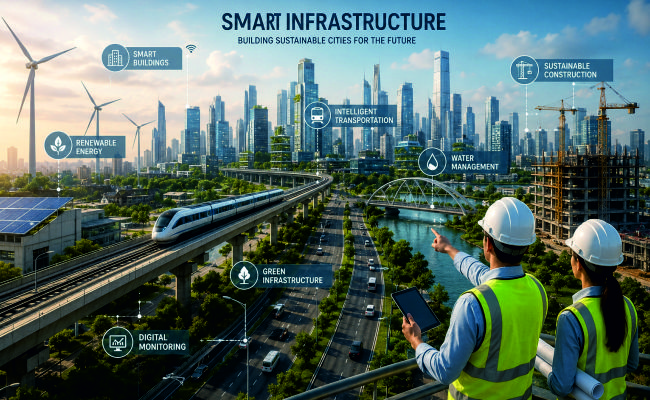
Key Innovations in 2026:
- Intelligent Traffic & Transit: Systems that adapt in real-time to reduce congestion and emissions.
- Sensor-Based Monitoring: Bridges and dams that “report” their own structural health to prevent failures.
- Smart Water Management: Networks that detect leaks and optimize delivery to combat global water scarcity.
Technologies Revolutionizing the Industry
The traditional drawing board has been replaced by digital equipment and automation, significantly reducing human error and increasing project efficiency.
- Building Information Modelling (BIM)
BIM allows engineers to create comprehensive digital twins of infrastructure before a single brick is laid. This leads to enhanced visualization, accurate cost assessment, and accelerated project timelines.
- AI and Robotics
AI systems now predict project risks and optimize construction schedules, while robotics and 3D printing are beginning to manufacture building components with minimal material waste.
- Drone Technology
Drones have become indispensable for high-accuracy land surveying, site inspections, and structural checks, saving both time and labour costs.
Green Engineering: Building for Resilience
With climate change increasing the risk of natural disasters, sustainability is now a mechanical necessity.
- Green Buildings: Designed with solar power, rainwater harvesting, and natural ventilation to drastically reduce carbon footprints.
- Resilient Infrastructure: Engineers are now tasked with building systems capable of withstanding floods, earthquakes, and extreme heatwaves.
Career Opportunities in a Growing Field
The demand for competent engineers is rising globally within both government and private sectors. Graduates today can pivot into high-impact roles such as:
- Infrastructure Consultants & Urban Planners
- Environmental & Geotechnical Engineers
- Smart City Project Managers
The AIMT Advantage: Preparing Industry-Ready Professionals
At Ambalika Institute, we believe that modern engineering education must be based on practical innovation and industry exposure. Future civil engineers require a blend of technical design abilities and software proficiency.
Our curriculum emphasizes:
- Practical Exposure: Workshops and industrial visits that mirror real-world challenges.
- Tech-Savvy Problem Solving: Mastery of BIM, AI applications, and sustainable engineering practices.
- Leadership & Ethics: Training engineers to be innovators and environmental protectors who prioritize public safety.
Conclusion
Today’s civil engineers are more than just builders—they are planners and tech-savvy problem-solvers navigating a path toward a better world. By combining digital transformation with green development, we are building the smarter, safer communities of tomorrow.