
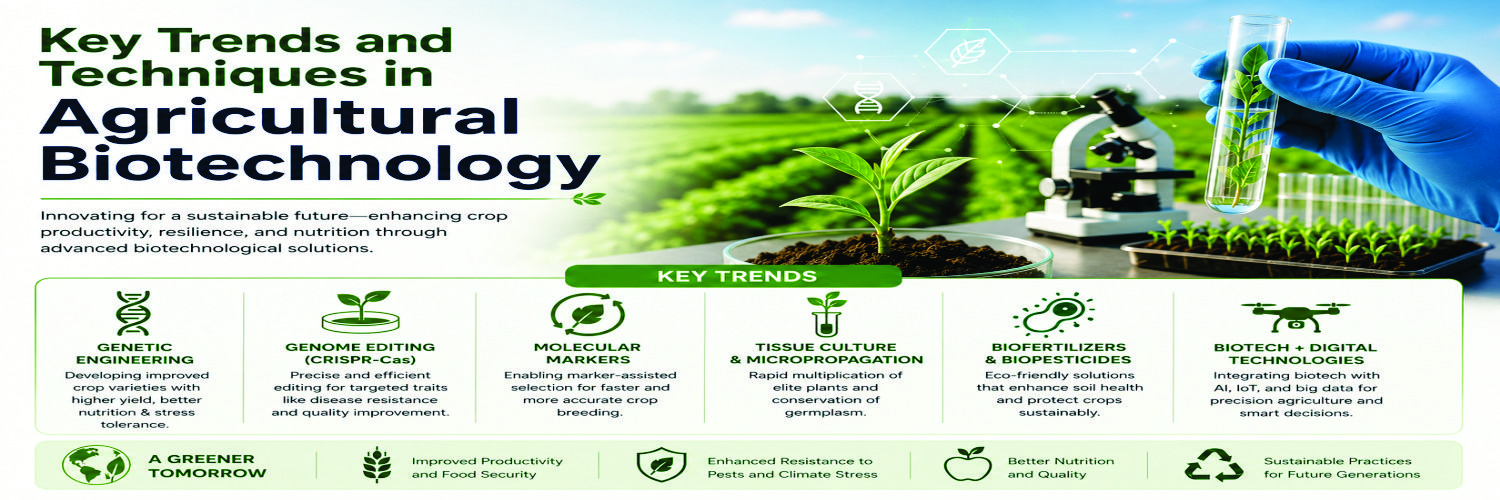
- Genetically Modified (GM) Crops
Genetically Modified (GM) crops are developed by altering the genetic structure of plants to enhance desired traits such as pest resistance, drought tolerance, and higher yield. Common examples include Bt Cotton, GM soybean, GM corn, and Golden Rice.
For instance, Bt Cotton is widely cultivated in India because it resists bollworm infestation, significantly reducing pesticide use and increasing crop productivity. Similarly, Golden Rice has been developed to address vitamin A deficiency.
GM crops help improve food security while reducing environmental damage caused by excessive pesticide use.
- Bio-fertilizers
Bio-fertilizers are natural fertilizers containing beneficial microorganisms such as bacteria, fungi, and algae that enhance soil fertility. Examples include Rhizobium, Azotobacter, and blue-green algae.
These organisms improve nutrient availability in the soil, especially nitrogen fixation, reducing the need for chemical fertilizers. Bio-fertilizers are environmentally friendly and contribute to long-term soil health, making them an essential component of sustainable farming practices.
- Bio-pesticides
Bio-pesticides are natural pest control agents derived from plants, bacteria, or fungi. Unlike chemical pesticides, they are biodegradable and environmentally safe.
Neem-based pesticides are widely used as they effectively control pests without harming beneficial insects or polluting soil and water. The increasing demand for organic and chemical-free food has accelerated the adoption of bio-pesticides in modern agriculture.
- Tissue Culture Technology
Tissue culture is a laboratory-based technique used to grow plants from small tissue samples under sterile conditions. It enables rapid multiplication of high-quality, disease-free plants.
This method is widely used for crops such as banana, sugarcane, potato, and orchids. Tissue culture is especially valuable because it allows large-scale production of uniform and healthy plants in a short period, supporting commercial farming and crop improvement programs.
- Precision Farming
Precision farming, also known as smart farming, uses modern technologies such as GPS, sensors, drones, and artificial intelligence to monitor and manage agricultural fields.
These technologies allow farmers to assess soil conditions, track crop health, and optimize irrigation and fertilizer usage. For example, sensors can detect soil moisture levels, enabling targeted irrigation that reduces water wastage. Precision farming improves efficiency, reduces costs, and enhances productivity.
- Drone Technology in Agriculture
Drones are increasingly used for agricultural monitoring and management. They help in spraying pesticides, capturing aerial images, detecting crop diseases, and assessing irrigation needs.
For example, drones can quickly scan large fields to identify pest infestations or nutrient deficiencies. This reduces manual labour and enables timely intervention, improving overall crop health and productivity.
- Vertical Farming
Vertical farming involves growing crops in stacked layers, often inside controlled indoor environments. This technique uses artificial lighting (LEDs) and hydroponic systems instead of soil.
It is highly efficient in urban areas where land is limited. Vertical farming reduces water usage, enables year-round production, and minimizes transportation needs by bringing food production closer to consumers.
- Hydroponics and Aeroponics
Hydroponics involves growing plants in nutrient-rich water without soil, while aeroponics grows plants in air with nutrients delivered through mist.
These methods promote faster growth, reduce water consumption, and eliminate soil-borne diseases. They are particularly useful in areas with poor soil quality or limited agricultural land.
- Climate-Resistant Crops
Climate change has increased the frequency of droughts, floods, and heat waves, affecting agricultural productivity. To address this, scientists are developing climate-resistant crop varieties.
Examples include flood-resistant rice, heat-tolerant wheat, and salt-resistant crops. These innovations help ensure stable food production even under extreme environmental conditions.
- Artificial Intelligence and Big Data in Agriculture
Artificial Intelligence (AI) and Big Data analytics are revolutionizing agriculture by enabling data-driven decision-making. Farmers can now use mobile applications and digital platforms to predict weather patterns, detect plant diseases, estimate yields, and monitor crop health.
AI systems analyze data from satellites, sensors, and drones to provide accurate recommendations. This helps farmers reduce risks, optimize resource usage, and improve productivity.
Challenges in Agricultural Biotechnology
Despite its advantages, agricultural biotechnology faces several challenges:
- High cost of advanced technologies
- Limited awareness among farmers
- Ethical concerns related to GM crops
- Regulatory restrictions and approval delays
- Need for skilled professionals and technical training
Additionally, concerns about the long-term environmental and health impacts of genetically modified organisms require careful monitoring and research.
Future of Agricultural Biotechnology
The future of agriculture is expected to be highly technology-driven. Emerging innovations such as automated farming systems, AI-based crop management, robotic harvesting, and advanced genetic engineering will transform agricultural practices.
Smart irrigation systems and climate-adaptive crops will further improve sustainability. As global food demand continues to rise, biotechnology will play a crucial role in ensuring food security while protecting natural resources.
Conclusion
Agricultural biotechnology represents a major shift from traditional farming to science-driven, sustainable agriculture. Through innovations such as GM crops, precision farming, bio-fertilizers, and AI-based systems, agriculture is becoming more productive, efficient, and environmentally friendly.
Although challenges remain, continued research and technological advancement will ensure that biotechnology remains central to the future of global food production. It not only supports farmers in improving yields but also contributes to building a more sustainable and food-secure world.