 Author: Department of Computer Science & Engineering (Artificial Intelligence & Machine Learning)
Introduction
We live in an era where almost every aspect of daily life is connected to the internet. From smartphones and smart homes to online banking, healthcare systems, e-commerce platforms and social media, digital technologies have transformed how we communicate, learn, shop and work. Every search, purchase, click and online interaction generates valuable data that powers today’s digital economy.
While this connectivity has created unprecedented convenience and innovation, it has also raised significant concerns about data privacy. Personal information—including names, financial records, health data, browsing history and location details—is collected, stored and analysed by organisations worldwide. Protecting this information has become one of the most important challenges of the digital age.
For engineering students, understanding data privacy is no longer optional. It is a fundamental responsibility for anyone involved in software development, network management, data analytics or intelligent systems. As technology continues to evolve, safeguarding user privacy will remain central to responsible innovation.
What is Data Privacy?
Data privacy refers to the responsible collection, storage, processing, sharing and protection of personal and sensitive information. It ensures that individuals have control over how their data is used and who is authorised to access it.
Unlike data security, which focuses on preventing unauthorised access, data privacy emphasises the ethical and lawful use of personal information. Together, these two concepts help create a secure and trustworthy digital environment.
Examples of personal data include:
- Full name and contact information
- Aadhaar or passport details
- Banking and financial records
- Medical history
- Educational records
- Location data
- Online browsing behaviour
- Biometric information
Organisations have a responsibility to protect this information while respecting user consent and privacy rights.
Why Data Privacy Matters
In today’s connected world, personal information has become one of the most valuable digital assets. Businesses rely on data to improve customer experiences, governments use it to deliver public services, and researchers analyse it to address complex challenges.
However, misuse or unauthorised access to personal data can lead to:
- Identity theft
- Financial fraud
- Cybercrime
- Privacy violations
- Reputational damage
- Loss of customer trust
Strong data privacy practices help organisations build public confidence while reducing legal, operational and cybersecurity risks.
Data Privacy in Everyday Life
Most people share personal information every day without fully realising how much data is being generated.
Social Media: Every post, photograph, comment and reaction contributes to digital profiles used for personalisation and advertising.
Online Shopping: E-commerce platforms collect purchase histories, payment details and browsing preferences to improve customer experiences.
Healthcare: Hospitals and healthcare providers manage highly sensitive medical records that require robust privacy protection.
Smart Devices: Smartphones, fitness trackers, smart speakers and IoT devices continuously collect information about user behaviour and daily activities.
Online Education: Learning management systems store attendance records, assignments, assessments and academic information, making privacy protection essential within educational institutions.
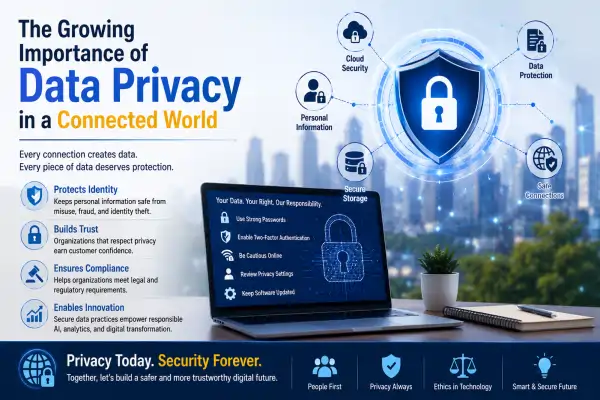
Image 1: Data privacy safeguards personal information across connected technologies, ensuring secure and responsible use of digital services.
Emerging Privacy Challenges
Artificial Intelligence requires large datasets for effective learning, making ethical data collection and responsible processing increasingly important.
The Internet of Things (IoT) connects billions of devices that continuously exchange information. Weak security within these devices can expose sensitive personal data.
Cloud computing enables organisations to store and manage vast amounts of information, making encryption, access control and regulatory compliance essential.
Big Data Analytics helps organisations identify trends and improve decision-making, but privacy-preserving techniques are needed to minimise unnecessary identification of individuals.
Meanwhile, cyber threats such as phishing, ransomware and data breaches continue to evolve, making robust privacy and security measures more important than ever.
Technologies Supporting Data Privacy
Modern organisations rely on several technologies to protect sensitive information, including:
- Data Encryption
- Multi-Factor Authentication (MFA)
- Secure Cloud Storage
- Identity and Access Management (IAM)
- Blockchain Technology
- Privacy-Preserving Machine Learning
- Differential Privacy
- Zero Trust Security Architecture
These technologies help ensure that sensitive information remains accessible only to authorised users while reducing privacy risks.
Best Practices for Protecting Personal Data
Everyone has a role in protecting digital privacy. Students and professionals should:
- Use strong, unique passwords.
- Enable multi-factor authentication.
- Keep software and devices updated.
- Avoid sharing unnecessary personal information online.
- Verify website security before entering sensitive information.
- Regularly review privacy settings.
- Remain cautious of phishing emails and suspicious links.
- Back up important data securely.
Developing these habits significantly reduces the risk of cyberattacks and identity theft.
The Role of Engineers in Data Privacy
Future engineers play a vital role in designing secure, privacy-focused technologies. Responsible professionals should build privacy into software from the earliest stages of development, develop secure databases and cloud systems, implement strong encryption, comply with data protection regulations, design AI systems that respect user privacy, and conduct regular security testing and risk assessments.
Privacy should be an integral part of system design rather than an afterthought.
Career Opportunities in Data Privacy
As organisations strengthen privacy and cybersecurity practices, demand for skilled professionals continues to grow.
Career opportunities include:
- Cybersecurity Analyst
- Data Privacy Officer
- Information Security Engineer
- Cloud Security Engineer
- Ethical Hacker
- Digital Forensics Expert
- Data Protection Consultant
- Risk and Compliance Analyst
- Security Architect
- AI Security Specialist
These roles are available across technology companies, healthcare, banking, education, government organisations and multinational enterprises.
Skills Students Should Develop
Students interested in privacy and cybersecurity should develop expertise in Cybersecurity Fundamentals, Networking, Cloud Computing, Database Security, Python Programming, Cryptography, Artificial Intelligence, Ethical Hacking, Digital Forensics, Identity and Access Management, Secure Software Development and Risk Management.
Analytical thinking, ethical decision-making, teamwork and a commitment to continuous learning are equally important.
The Future of Data Privacy
The future of data privacy will be shaped by advances in artificial intelligence, cloud computing, edge computing, blockchain and quantum technologies.
Emerging trends include:
- Privacy-Preserving AI
- Federated Learning
- Confidential Computing
- Zero Trust Security
- AI-driven Threat Detection
- Privacy Engineering
- Quantum-resistant Cryptography
- Automated Compliance Monitoring
Organisations that prioritise privacy will build greater customer trust while improving resilience against evolving cyber threats.
Conclusion
As our world becomes increasingly connected, protecting personal information has become a shared responsibility for individuals, organisations and governments. Data privacy is no longer simply a legal requirement—it is the foundation of trust, responsible innovation and sustainable digital transformation.
For engineering students, understanding data privacy provides a significant advantage in a technology landscape where secure and ethical system design is increasingly important. By learning modern privacy technologies, following ethical practices and adopting a security-first mindset, today’s students can help build a safer and more trustworthy digital future.
The connected world offers limitless opportunities, but its continued success depends on protecting the information that powers it. Responsible innovation begins with respecting, protecting and safeguarding data.