Department of Mechanical Engineering
Ambalika Institute of Management and Technology offers a top-ranked B.Tech in Mechanical Engineering in Lucknow, affiliated with AKTU and structured across eight semesters.
This dynamic field blends engineering, physics, materials science, and mathematics to design, manufacture, and maintain mechanical systems. Mechanical engineers harness heat and mechanical power to create tools and machinery for industries like manufacturing, infrastructure, and energy. Core concepts—mechanical motion, energy transfer, material properties, structural integrity, and electrical integration—enable them to optimize everything from medical devices and transportation networks to industrial equipment.
As technology advances, mechanical engineers pioneer breakthroughs in materials science, nanotechnology, biomechanics, aerospace, biomedical engineering, and more. They tackle global challenges in energy, transportation, healthcare, climate change, space exploration, and beyond, influencing nearly every product and service that improves lives.
Laboratories in Department of Mechanical Engineering:-
| Fluid Mechanics & Hydraulics | Manufacturing & Metrology | Machine Design & Theory | Workshop & Projects |
| Fluid Mechanics Lab | Manufacturing Lab | Machine Design-II Lab | Workshop Lab |
| Material Science & Testing | Metrology and Metrology Lab | Theory of Machines | Graphics Lab |
| Drawing I Lab | Machine Design-I Lab | Design of Machines Tool | Rapid/Additive Mfg Lab |
| Thermodynamics Lab | Seminar Lab | CAD/CAM Lab | Tool Room & Project Lab |
| CNC Lab Drawing II Lab | Science-E Lab | IC Engine Lab | Automobile Lab |
| Machine Drawing Lab | Heat & Mass Transfer Lab | Project Lab |
Program Educational Objectives
PEO 1: To prepare students for successful career in Core Mechanical and Interdisciplinary Industries through strong foundation in mathematical, scientific and engineering fundamentals. (Pre-preparation)
PEO 2: To develop ability among the students for acquiring technical knowledge in specialized areas of Mechanical Engineering such as Materials, Design, Manufacturing and Thermal Engineering with a focus on research and innovation and gaining the technical skills in classical software packages. (Core competence and professionalism)
PEO 3: To equip students with broad based knowledge to support the service industries, economic development and to address social and engineering challenges of the nation. (Breadth)
PEO 4: To promote the students for continuous learning, research and development with strong professional, moral and ethical values and zeal for life-long learning. (Learning environment)
Program Outcomes
PO 1: Engineering knowledge: Apply the knowledge of mathematics, science, engineering fundamentals, and an engineering specialization to the solution of complex engineering problems.
PO 2: Problem analysis: Identify, formulate, review research literature, and analyze complex engineering problems reaching substantiated conclusions using first principles of mathematics, natural sciences, and engineering sciences.
PO 3: Design/development of solutions: Design solutions for complex engineering problems and design system components or processes that meet the specified needs with appropriate consideration for the public health and safety, and the cultural, societal, and environmental considerations.
PO 4: Conduct investigations of complex problems: Use research-based knowledge and research methods including design of experiments, analysis and interpretation of data, and synthesis of the information to provide valid conclusions.
PO 5: Modern tool usage: Create, select, and apply appropriate techniques, resources, and modern engineering and IT tools including prediction and modeling to complex engineering activities with an understanding of the limitations.
PO 6: The engineer and society: Apply reasoning informed by the contextual knowledge to assess societal, health, safety, legal and cultural issues and the consequent responsibilities relevant to the professional engineering practice.
PO 7: Environment and sustainability: Understand the impact of the professional engineering solutions in societal and environmental contexts, and demonstrate the knowledge of, and need for sustainable development.
PO 8: Ethics: Apply ethical principles and commit to professional ethics and responsibilities and norms of the engineering practice.
PO 9: Individual and team work: Function effectively as an individual, and as a member or leader in diverse teams, and in multidisciplinary settings.
PO 10: Communication: Communicate effectively on complex engineering activities with the engineering community and with society at large, such as, being able to comprehend and write effective reports and design documentation, make effective presentations, and give and receive clear instructions.
PO 11: Project management and finance: Demonstrate knowledge and understanding of the engineering and management principles and apply these to one’s own work, as a member and leader in a team, to manage projects and in multidisciplinary environments.
PO 12: Life-long learning: Recognize the need for, and have the preparation and ability to engage in independent and life-long learning in the broadest context of technological change.
Program Specific Outcomes
PSO 1: The Mechanical Engineering Graduates will be able to work in energy sectors, manufacturing industries, automotive industries along with software industries in the sphere of design, operation, maintenance and research.
PSO 2: Graduates will able to serve the nation and human being not only as an engineer but as an entrepreneur also with positive moral attitude and global competency approach of industrial management.
Department Vision
To nurture the students in achieving excellence in mechanical engineering to develop proficiency in the field of research activities along with overall personality development and contribute to the nation and humanity.
Department Mission
- To motivate students to indulge in analytical and creative thinking by putting them in challenging environment by means of appropriate pedagogy.
- To develop department of mechanical engineering as a centre of excellence in the various advance fields.
- To develop the habit of continuous learning, team work and fulfill the societal needs.
Career Opportunities
Mechanical Engineering is one of the oldest and broadest engineering disciplines. It applies principles of physics, materials science, and mathematics to design, analyze, and manufacture innovative mechanical systems.
Mechanical engineers work across industries including automotive, aerospace, construction, energy, manufacturing, healthcare, and robotics. They design new products, improve existing systems, and solve complex problems related to machines and thermal/fluid dynamics. Key specializations include robotics, biomechanics, thermodynamics, acoustics, and nanotechnology.
With rising automation, Industry 4.0, and sustainable technologies, demand grows for engineers skilled in smart systems, renewable energy, and green manufacturing. Government initiatives like Make in India drive opportunities in PSUs (ISRO, BHEL, ONGC) and MNCs (Tata, ABB, Siemens).
Ambalika Institute graduates can target roles such as:
- Design Engineer
- Manufacturing/Production Engineer
- Maintenance Engineer
- Quality Control Engineer
- R&D Engineer (robotics/mechatronics)
Further specialization in thermal engineering, CAD/CAM, or automation enhances employability. Entry-level salaries typically range from INR 4.5-8 lakhs per annum, varying by location (higher in metros), experience, and skills.
Industry Academia Interaction
On World Plumbing Day (11 March 2024), Ambalika Institute hosted a seminar and competition on the theme “Save Water,” organized by distinguished guests from the Indian Plumbing Association, Lucknow: Mr. Devesh Mani Tripathi (Chairman), Mr. Rajesh Singh (Vice Chairman), and Mr. Awadhesh Mishra (Secretary).
Participation:
- Total internal participants: 225
- Students: 200
- Faculty members: 25
Department Achievements
Industry Partnerships
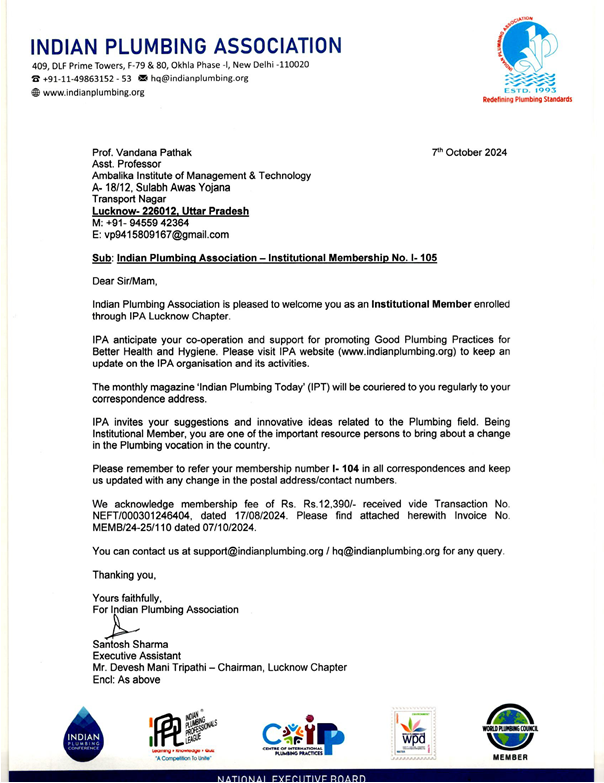
Indian plumbing association membership
The department proudly holds active membership in the Indian Plumbing Association (IPA), India’s premier body dedicated to advancing plumbing technology, standards, and sustainability in water management.
- Key Benefits: Access to cutting-edge research, workshops on eco-friendly plumbing systems, and certification programs for students and faculty.
- Achievements: Participated in IPA’s National Plumbing Conference 2025, contributing to discussions on smart water conservation tech. Our members have implemented IPA guidelines in student projects, reducing water wastage by 30% in campus prototypes.
- Impact: This affiliation equips our B.Tech students with industry-relevant skills, fostering innovation in sustainable plumbing solutions for urban India.
Top Three Student Projects (2023-24)
These projects reflect innovation across sustainability, mechanical systems, and automotive engineering.
- Design and Fabrication of 5-Stage Solar Air Purifier
Team: Amit Prajapati, Aniket Prajapati, Hari Om Chaurasiya, Vikash Kumar
- Solar-powered purifier with 5-stage filtration (pre-filter, HEPA, UV, activated carbon, ionizer)
- Achieves ~95% PM2.5 removal
- Portable design; capacity: 500 m³/hour
- Recognized at technical exhibitions for eco-innovation
- Hydraulic Elevator System
Team: Ehashan Shekh, Md Kalimullah, Pankaj Yadav, Shubham Kumar
- Designed a compact and efficient hydraulic lift system
- Focus on smooth operation, safety mechanisms, and energy efficiency
- Applicable for low-rise buildings and industrial use
- Electromagnetic Braking System
Team: Abhishek Singh, Akash Chaudhary, Avinash Singh, Shailesh Pratap Singh
- Developed a contactless braking system using electromagnetic principles
- Reduces mechanical wear and improves braking efficiency
Suitable for high-speed and heavy-duty applications
Faculty Achievements
| S.No. | Name | Title | Patent Registration no. | Patent Award date |
| 1 | Mrs. Vandana Pathak | Plastic Waste Minimizing At Robotic Device | 430234-001 | 05/12/2024 |
| 2 | Mr. Madhur Prakash Srivastava | Plastic Waste Minimizing At Robotic Device | 430234-001 | 05/12/2024 |
| 3 | Mr. Shiv Singh | Drowsinesss Detection System And Method In Cabin | 202111007242 | 28/02/2022 |
| 4 | Dr. Prashant Kumar Srivastava | Robot assisted battery inter changing system for electric vehicles. | 202111013882 | 02/04/2021 |
International Go-Kart Championship
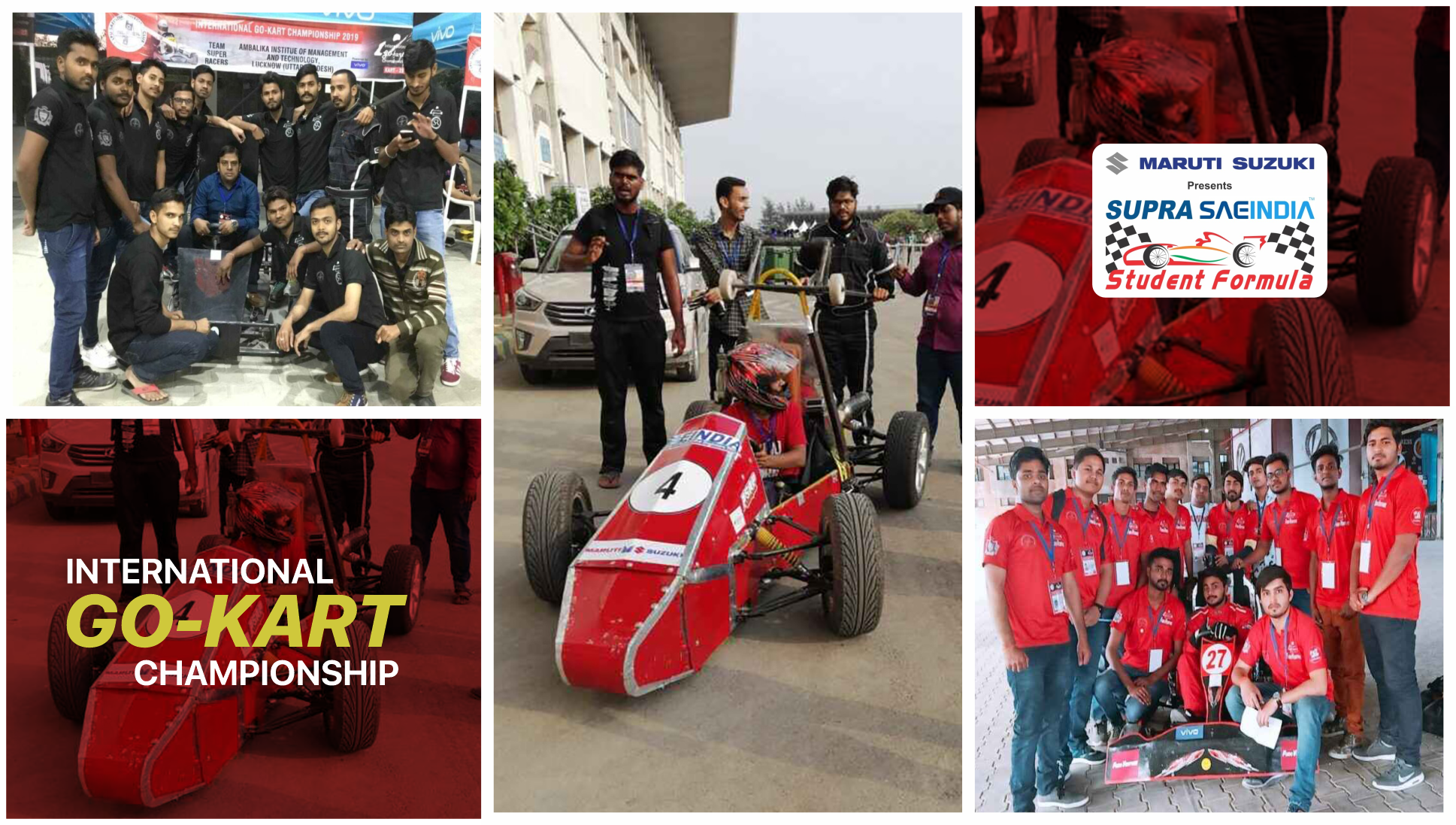
Our student team shone at the International Go-Kart Championship held in March 2019, LPU, competing against top engineering institutes from India and abroad.
- Team Highlights: Designed and fabricated a high-performance go-kart featuring an efficient electric drivetrain, aerodynamic chassis, and advanced braking system—showcasing expertise in automotive engineering.
- Results: Secured 3rd place in the electric category, with a lap time of 45.2 seconds. The team demonstrated superior pit-stop efficiency and vehicle stability under high-speed conditions.
- Faculty Mentor: Mr. Shiv Singh, who guided the integration of IoT sensors for real-time performance monitoring.
- Outcome: Enhanced student skills in motorsports engineering, leading to two patent filings for kart innovations.
Lucknow Architecture Festival 2.0
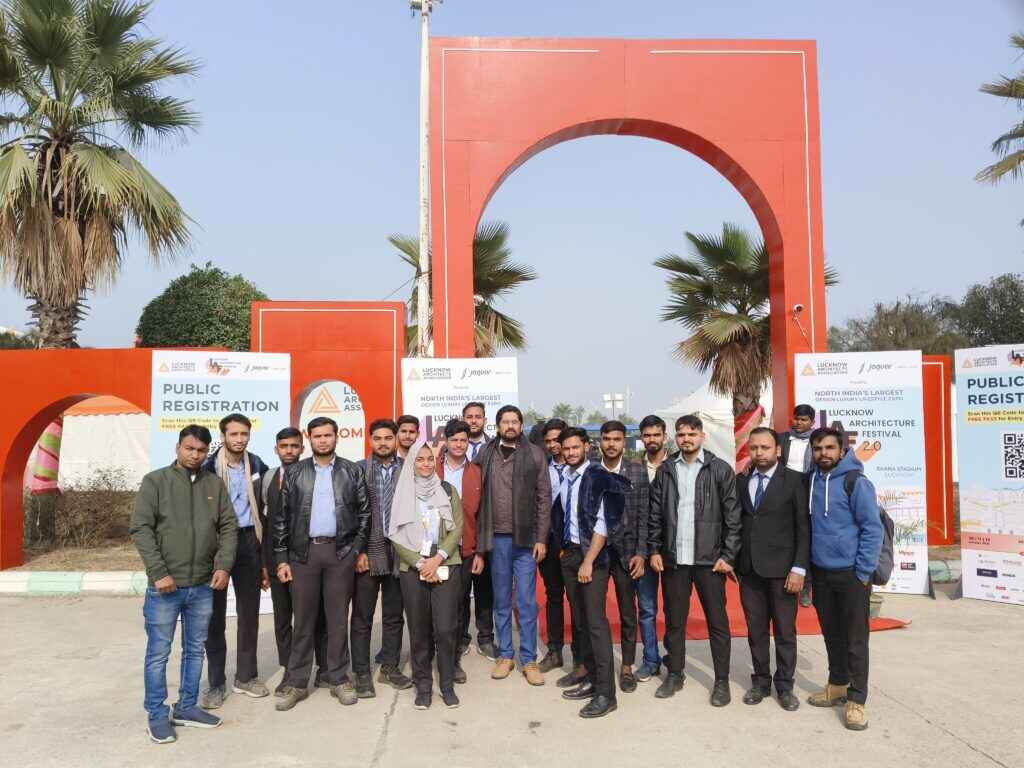
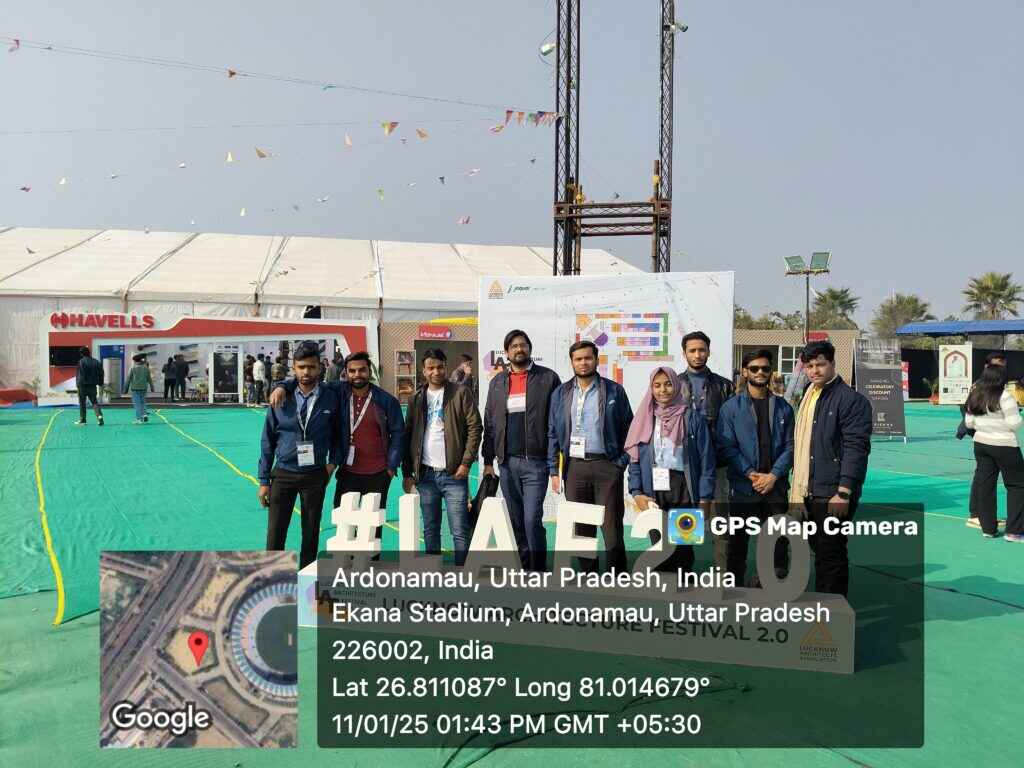
The department earned a spot in the Hall of Fame at Lucknow Architecture Festival 2.0 (2024), recognizing excellence in interdisciplinary design and sustainable architecture.
- Entry: Submitted a student-led project on “Modular Green Plumbing Systems for Smart Buildings,” blending plumbing tech with architectural innovation.
- Highlights: The design featured rainwater harvesting integrated with AI-controlled purification, earning praise for its scalability in Uttar Pradesh’s urban landscapes.
- Team: Led by [Student Lead Name], with contributions from 5th-semester B.Tech students under faculty supervision.
- Impact: Festival award boosted our profile, resulting in collaborations with local architects and a feature in the festival’s digital archive.
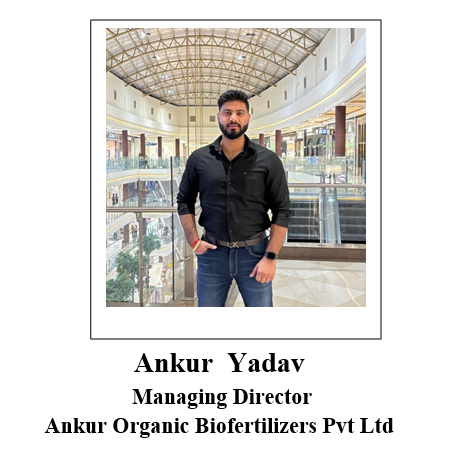
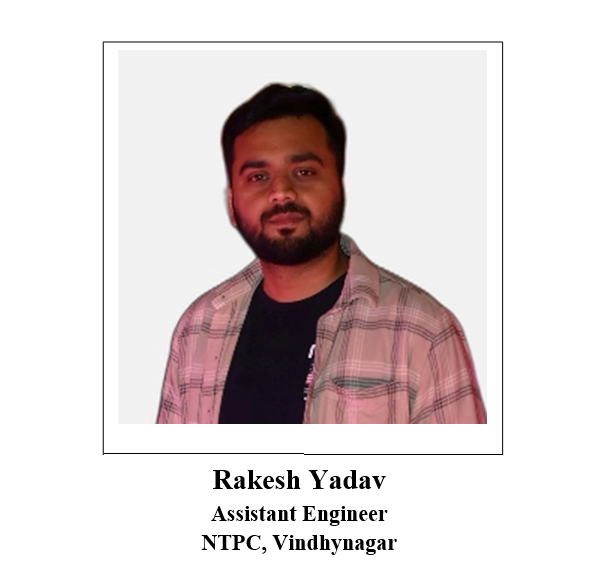
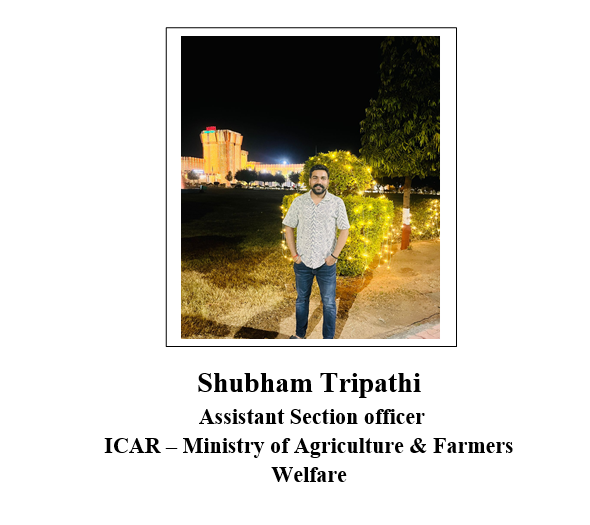
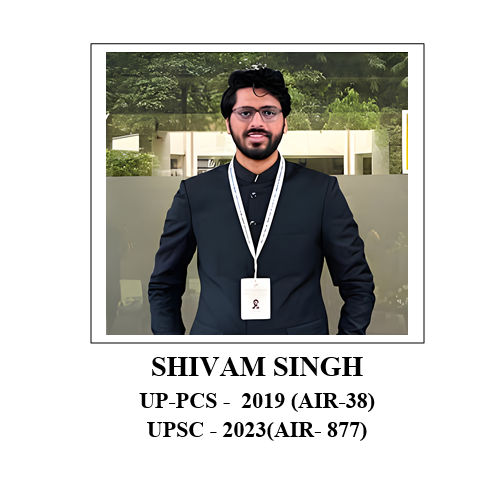
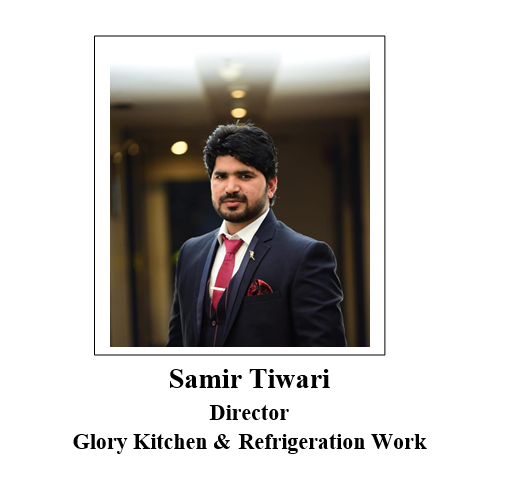
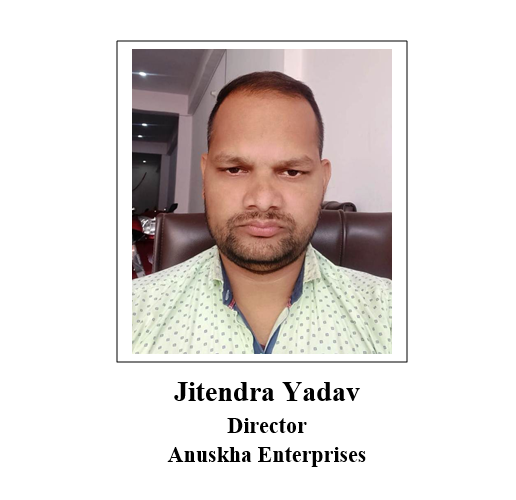
Hall of Fame
Curriculum & Syllabus
A four-year B. Tech in Mechanical Engineering gives students a foundational grasp of how heavy machines and tools operate. Our mechanical engineering curriculum teaches students how to design heavy vehicles such as cars, electric motors, and airplanes. Everything from personal computers, air conditioners, new batteries, medical equipment, car engines, and electric power plants, is designed by mechanical engineers. Mechanical engineers also create the machines that generate these breakthroughs. The field of mechanical engineering has enormous potential both domestically and internationally since it affects every facet of our lives. There are numerous job options for students enrolled in the program, spanning various industries.
The core B. Tech Mechanical Engineering subjects include Thermodynamics, IC Engines, Refrigeration and Air Conditioning, Fluid Mechanics, and Automobile Engineering. Apart from these, there are elective subjects that include Advanced Machining Processes, Nanomechanics, and Supply Chain Management.
For detailed information on the syllabus click on the links given below:
Faculty List (2025-26)
| Sr No | Name | Designation | Department |
| 1 | Dr. ASHUTOSH DWIVEDI | PROFESSOR/DIRECTOR | ME |
| 2 | Dr. PRASHANT KUMAR SRIVASTAVA | ASSOCIATE PROFESSOR | ME |
| 3 | Mrs. VANDANA PATHAK | ASST PROFESSOR/HEAD | ME |
| 4 | Mr. SHIV SINGH | ASST PROFESSOR | ME |
| 5 | Mr. MADHUR PRAKASH SRIVASTAVA | ASST PROFESSOR | ME |
| 6 | Mr. MAYANK SRIVASTAVA | ASST PROFESSOR | ME |
| 7 | Mr. DURGESH TRIPATHI | ASST PROFESSOR | ME |
| 8 | Mr. AMIT GANGWAR | ASST PROFESSOR | ME |
| 9 | Mr. CHANDRA KUMAR DUBEY | ASST PROFESSOR | ME |
| 10 | Mr. VIKALP SAXENA | ASST PROFESSOR | ME |
Policy for Slow Learners
- Weak students will be identified on the basis of result of first Sessional exam, report of respective mentor and class test.
- On the basis of above report special mentoring will be done of each identified student.
- After result of second Sessional examination if there is no improvement in identified students, remedial classes will be arranged of those subjects in which students is lacking. Remedial classes may be scheduled in evening or in day time by arranging some slots in time table.
- Respective HOD will be responsible to arrange the remedial classes of the students; also HOD will monitor the attendance & syllabus progress of the students.
- All HOD’s will send the report regarding remedial classes to the Dean Academics & he will provide the complete analysis to Director for further necessary action.
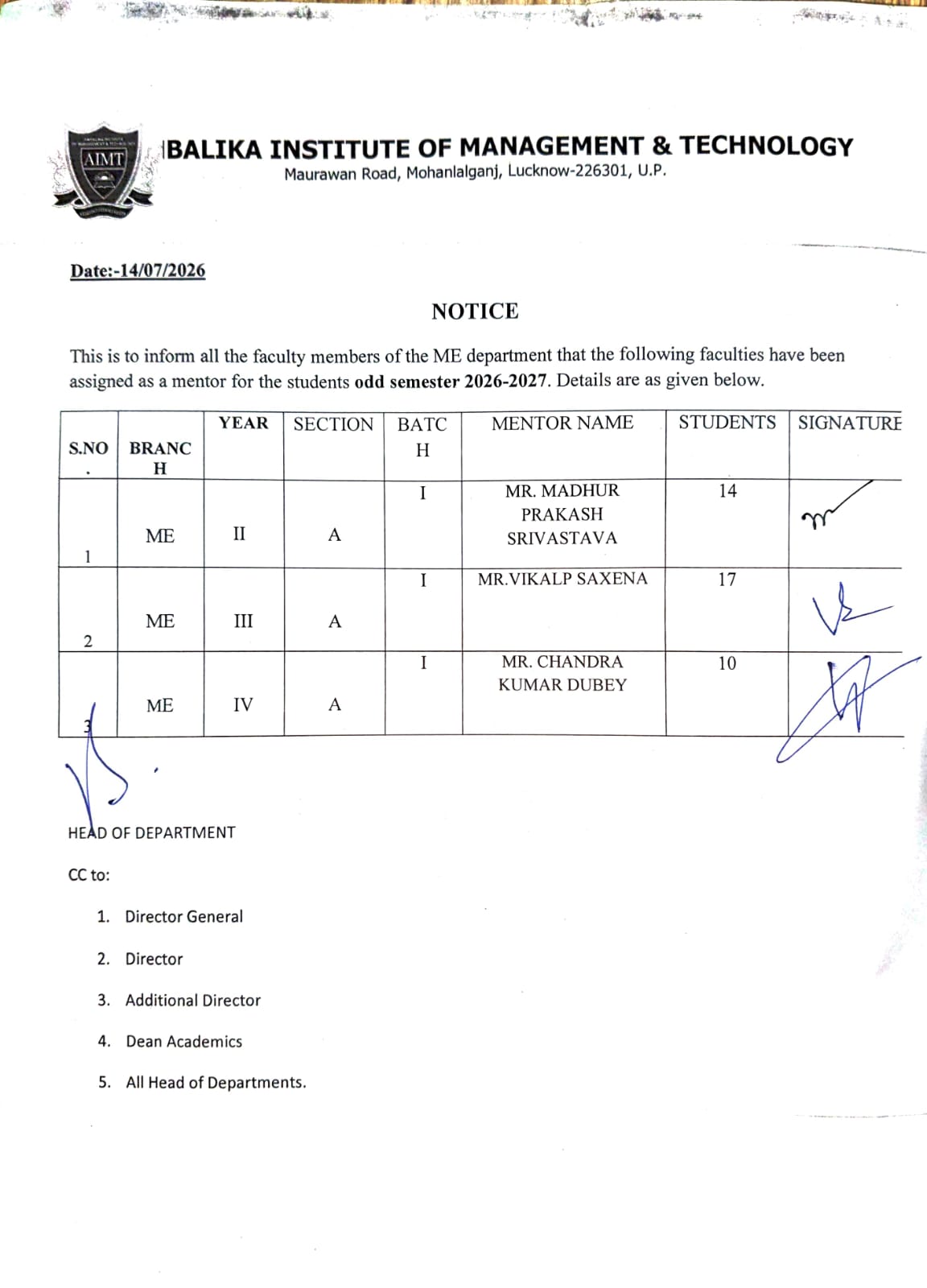
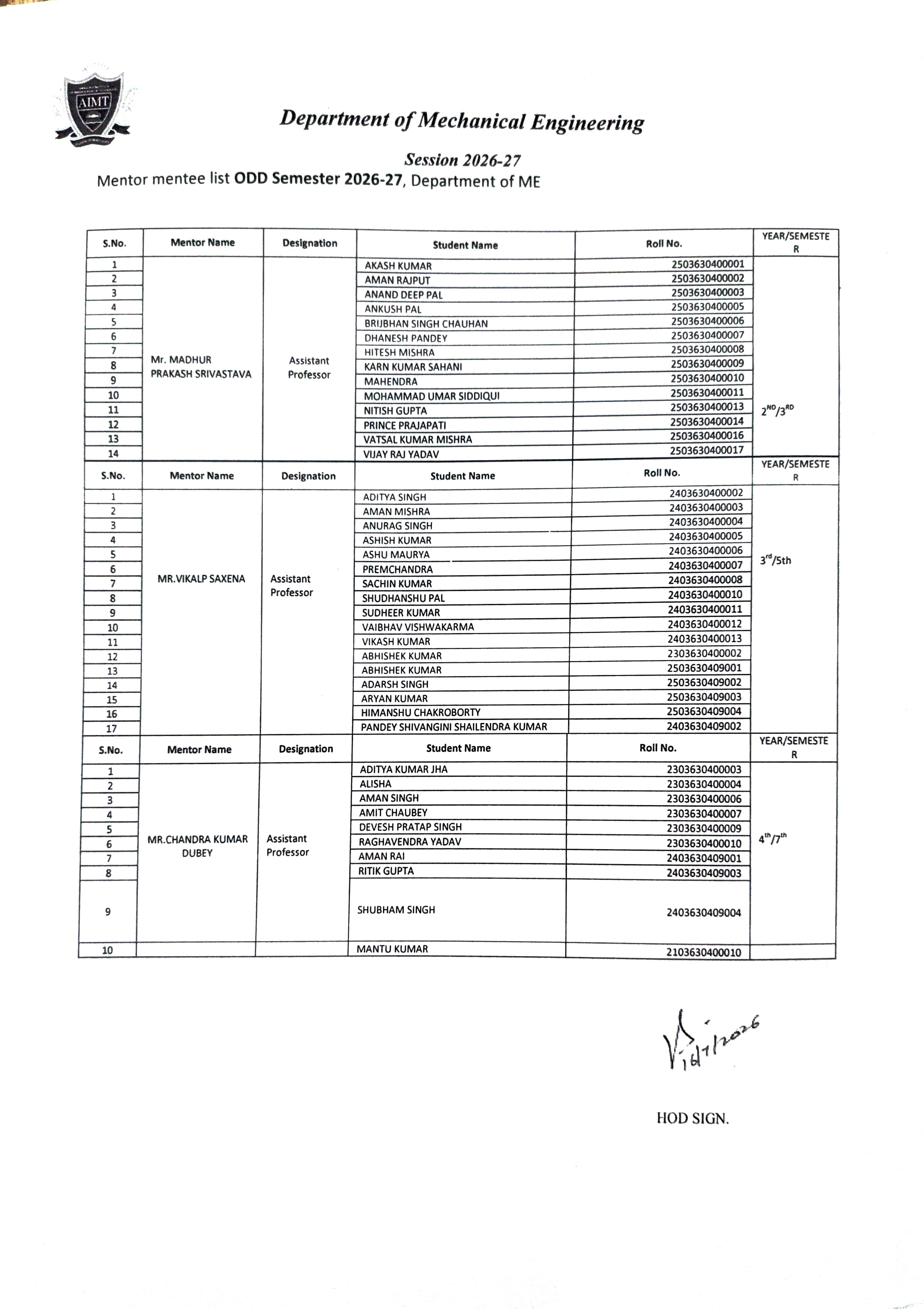
Mentor – Mentee Details 2026-27