 Author: Department of Mechanical Engineering
Introduction
Mechanical Engineering is often perceived as one of the oldest branches of engineering, leading many people to assume that it is outdated or offers fewer opportunities than emerging fields such as Artificial Intelligence, Data Science, or Robotics. Images of factory floors, heavy machinery, and conventional engines continue to shape public perception. However, this stereotype no longer reflects the reality of the profession.
Modern Mechanical Engineering is a dynamic and rapidly evolving discipline that combines engineering fundamentals with cutting-edge technologies. From electric vehicles and renewable energy systems to biomedical devices, aerospace engineering, robotics, and advanced manufacturing, mechanical engineers continue to solve some of society’s most complex challenges. Understanding how the discipline has evolved helps students appreciate why it remains one of the most versatile and future-ready engineering careers.
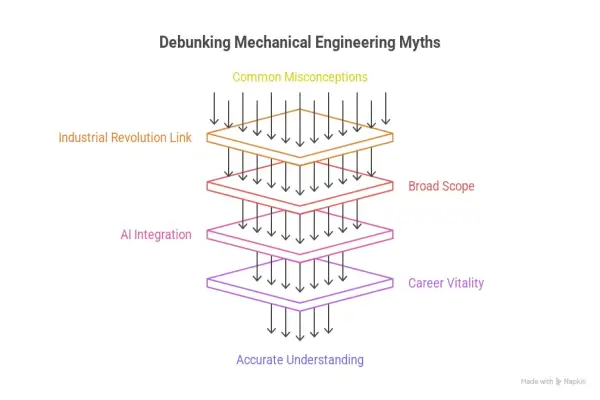
Myth 1: Mechanical Engineering Has Not Changed
One of the most common misconceptions is that Mechanical Engineering has remained largely unchanged since the Industrial Revolution. While the discipline has a long history, its methods, tools, and applications have transformed dramatically over the past few decades.
Today’s engineers design components using sophisticated Computer-Aided Design (CAD) software, validate their ideas through computer simulations, and optimise products before manufacturing even begins. Advanced materials, smart sensors, additive manufacturing, and digital twins have fundamentally changed the engineering design process.
Instead of relying solely on physical prototypes, engineers can now predict how a product will perform under different operating conditions, reducing costs while improving quality and safety. The scientific principles remain the foundation, but the technologies used to apply them continue to evolve rapidly.
Myth 2: Mechanical Engineering Is Only About Engines and Factories
Although engines, machines, and manufacturing remain important areas, Mechanical Engineering now extends far beyond traditional industries. Mechanical engineers contribute to healthcare, aerospace, renewable energy, consumer electronics, transportation, and automation.
For example, they develop prosthetic limbs that closely mimic natural movement, design surgical robots that improve medical precision, and create lightweight structures for aircraft and spacecraft. They also play a vital role in developing wind turbines, solar energy systems, and energy-efficient buildings.
The growing electric vehicle industry further demonstrates the diversity of the profession. Mechanical engineers design battery cooling systems, suspension mechanisms, structural components, thermal management systems, and vehicle dynamics that ensure safety, efficiency, and reliability.
Rather than being confined to factories, today’s mechanical engineers work across industries where innovation and sustainability are driving technological progress.
Myth 3: Artificial Intelligence Will Replace Mechanical Engineers
The rapid growth of Artificial Intelligence has created concerns that many engineering roles may eventually disappear. In reality, AI serves as a powerful engineering tool rather than a replacement for engineering expertise.
Modern design software can generate design alternatives, automate repetitive calculations, and improve simulation accuracy. However, AI cannot replace an engineer’s understanding of physics, mechanics, materials, manufacturing processes, or safety requirements.
Mechanical engineers must interpret simulation results, evaluate practical constraints, and make informed engineering decisions based on real-world conditions. Human judgement remains essential when balancing performance, cost, reliability, manufacturability, and sustainability.
Consequently, successful mechanical engineers increasingly combine traditional engineering knowledge with digital skills, making the profession more interdisciplinary than ever before.
Myth 4: Mechanical Engineering Is a Declining Career
Another widespread misconception is that Mechanical Engineering offers limited career opportunities. In reality, demand has shifted rather than declined. As new industries emerge, the need for skilled mechanical engineers continues to expand.
Mechanical engineers contribute significantly to electric mobility, robotics, aerospace, renewable energy, biomedical engineering, smart manufacturing, defence technologies, and industrial automation. Organisations developing autonomous vehicles, advanced medical equipment, precision manufacturing systems, and space technologies all depend on mechanical engineering expertise.
The profession’s adaptability is one of its greatest strengths. Graduates often find opportunities across multiple industries because the analytical and design skills they acquire are highly transferable.
What Modern Mechanical Engineering Looks Like
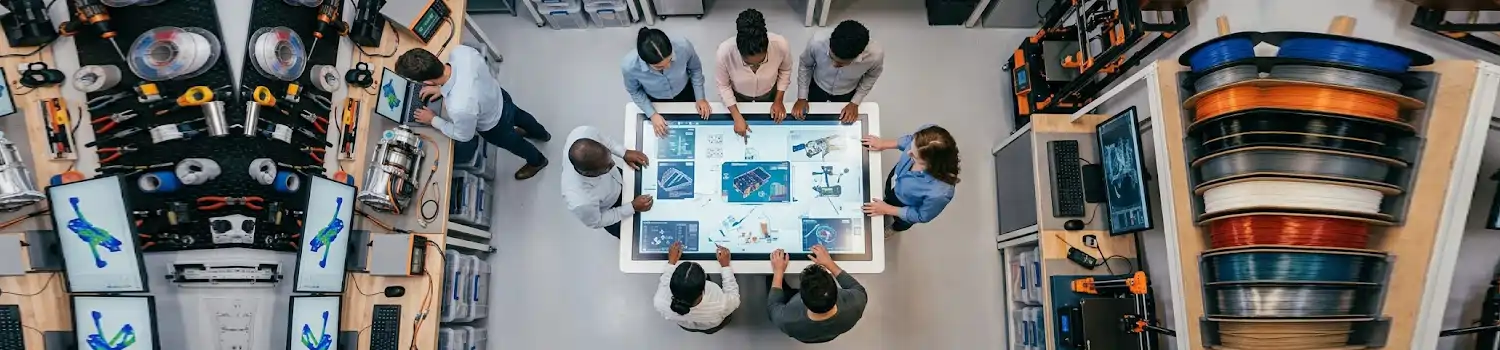
A contemporary mechanical engineering laboratory looks very different from the traditional image many people imagine. Students use advanced CAD software, 3D printers, CNC machines, robotics platforms, simulation software, and automated testing equipment to transform innovative ideas into practical solutions.
The engineering design process has also become highly collaborative. Mechanical engineers regularly work alongside software developers, electronics engineers, materials scientists, biomedical researchers, and data analysts to solve multidisciplinary problems.
Whether developing autonomous robots, designing energy-efficient transportation systems, improving manufacturing processes, or creating assistive medical devices, modern mechanical engineering combines creativity, scientific knowledge, and practical problem-solving to address real-world challenges.
Why Changing This Perception Matters
Misconceptions about Mechanical Engineering discourage many talented students from exploring a discipline that offers remarkable diversity and long-term career prospects. Students interested in innovation, sustainability, robotics, healthcare, transportation, or space exploration may overlook Mechanical Engineering simply because they associate it with outdated industries.
In reality, the profession continues to evolve alongside advances in digital technologies and scientific research. Mechanical engineers are helping shape cleaner energy systems, smarter manufacturing, advanced healthcare technologies, and sustainable infrastructure. Correcting outdated perceptions allows students to make informed career decisions based on the profession’s current scope rather than historical stereotypes.
Conclusion
Mechanical Engineering has never been a static discipline. While its fundamental scientific principles remain unchanged, its applications, technologies, and career opportunities continue to evolve at an extraordinary pace.
The same engineering principles that once powered steam engines now support electric vehicles, surgical robots, renewable energy systems, advanced manufacturing, and planetary exploration. Modern mechanical engineers combine technical expertise, creativity, digital technologies, and interdisciplinary collaboration to solve complex global challenges.
Rather than viewing Mechanical Engineering as an “old” branch of engineering, it should be recognised as a discipline that continually reinvents itself. For students who enjoy designing, innovating, and solving practical problems, it remains one of the most exciting, adaptable, and rewarding engineering careers of the future.